Moroccan food
How to Cook with Culinary Argan Oil
Culinary argan oil is traditionally used cold or gently warmed — in amlou, drizzled over bread, or finishing dishes — and is generally not used for frying. Here's how to use it in your kitchen.
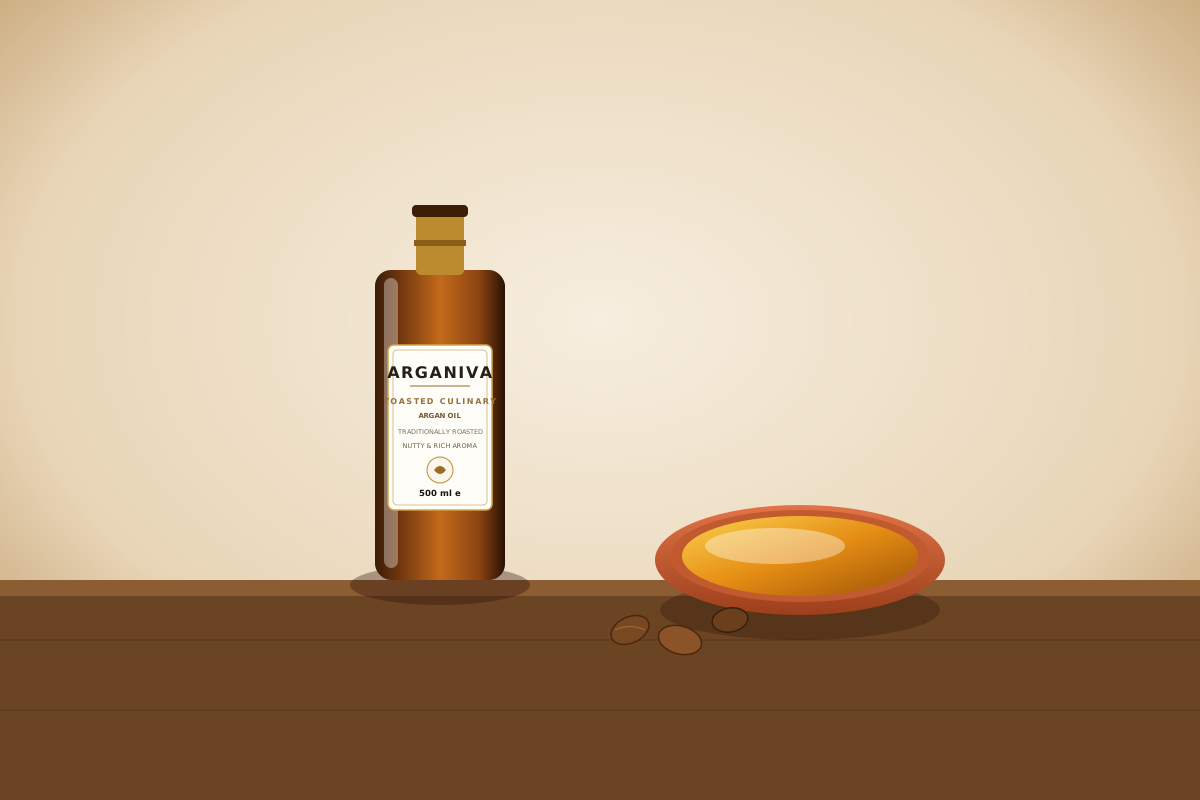
How do you cook with culinary argan oil?
Culinary argan oil is used cold or gently warmed, not for frying — its most traditional use is blended into amlou (a spread of roasted almonds, argan oil, and honey), and it’s also drizzled over bread, couscous, or finished dishes right before serving. Its toasted, nutty flavor is the whole point, and that flavor is better preserved than exposed to high heat.
Amlou: the classic use
Amlou is the dish most associated with culinary argan oil, and it’s worth understanding because it explains a lot about how the oil is meant to be used. It’s a thick, spreadable paste made from three ingredients:
- Roasted almonds, ground down finely
- Culinary argan oil, added gradually to bring the paste together
- Honey, for sweetness
The almonds are typically toasted and ground first, then argan oil is worked in a little at a time until the mixture reaches a thick, spreadable consistency — somewhere between peanut butter and a loose paste, depending on how much oil is used. Honey is stirred in to taste. There’s no fixed ratio; it comes down to preference, but a common approach uses roughly equal-ish parts almonds and argan oil by volume, with honey added last and adjusted to taste.
Amlou is traditionally eaten as a breakfast spread with khobz (Moroccan round bread), torn and dipped directly into the paste — closer to how you’d eat hummus with bread than how you’d spread butter or jam.
Other traditional uses
Beyond amlou, culinary argan oil shows up across Moroccan cooking in ways that lean on it as a finishing touch rather than a cooking medium:
- Drizzled over warm bread on its own, sometimes alongside olive oil, as a simple breakfast or snack.
- Finished over couscous, added at the table rather than during cooking, so the flavor stays intact.
- Drizzled over grilled or roasted vegetables just before serving.
- Mixed into salad dressings, often alongside lemon juice, as a nuttier alternative to olive oil.
- Stirred into soups like harira at the very end, off the heat.
Why not fry with it
Two things happen when you expose culinary argan oil to high, sustained heat: its distinctive toasted aroma and flavor start to break down, and you lose the exact quality that makes it worth using in the first place. It’s also simply not the traditional role it plays in Moroccan cooking — it’s treated as a finishing oil, in the same category as a good olive oil reserved for drizzling rather than deep-frying. If you’re cooking something that needs a high-heat oil, culinary argan oil isn’t the right tool for that step; use it after the cooking is done.
Pairing it with breakfast, Moroccan-style
A traditional Moroccan breakfast often centers on bread, and culinary argan oil fits into that spread alongside other staples — amlou in one small bowl, honey in another, sometimes olive oil or butter too, all meant for dipping torn pieces of khobz. It’s common to see argan oil offered simply on its own next to a plate of bread, without being mixed into anything, letting its toasted flavor stand on its own rather than being folded into a more complex dish. This simplicity is part of what makes it approachable if you’re trying it for the first time — you don’t need a recipe to appreciate it, just bread and a small dish to dip it in.
Storing it once opened
Culinary argan oil, like most pressed nut and seed oils, is sensitive to light, heat, and air exposure, all of which can gradually affect its flavor over time. Keeping the bottle tightly sealed, stored in a cool spot away from direct sunlight — a kitchen cabinet rather than a shelf near a stove or window — helps it hold its flavor for longer after opening. If you notice the toasted aroma has faded significantly or the oil smells off rather than nutty, that’s a sign it’s past its best, similar to how other cooking oils can turn over time.
A simple way to start
If you’ve never used culinary argan oil before, the easiest entry point is also the most traditional one:
- Toast a handful of almonds lightly in a dry pan.
- Grind them down (a food processor works fine) until they form a coarse paste.
- Add culinary argan oil a little at a time, mixing until it reaches a texture you like.
- Stir in honey to taste.
- Serve with warm bread.
From there, drizzling it over finished dishes is a low-effort way to work it into regular cooking without any real technique required.
Which oil to use
Only culinary argan oil — pressed from roasted kernels — is meant for food. Cosmetic argan oil is a different product intended for hair and skin, not eating. See cosmetic vs culinary argan oil for the full comparison.
Where to go from here
- Curious what sets the two oils apart by scent? Read what does argan oil smell like.
- Ready to order? Browse culinary argan oil.
Frequently asked questions
Can you fry with argan oil?
It's not recommended. Culinary argan oil has a distinctive toasted flavor that high heat tends to diminish or burn off, and it's traditionally used cold or gently warmed rather than as a frying oil.
What is amlou made of?
Amlou is a traditional Moroccan spread made from roasted almonds, culinary argan oil, and honey, blended into a thick paste. It's typically eaten with bread, especially at breakfast.
How long does culinary argan oil last once opened?
Like most pressed oils, it's best kept sealed, away from direct sunlight and heat, and used within a reasonable time after opening for the best flavor — check the label on your specific bottle for guidance.
Related products
Related articles
Cosmetic vs Culinary Argan Oil — What's the Difference?
They come from the same fruit, but cosmetic and culinary argan oil are made differently, smell different, and are not interchangeable.
What Does Argan Oil Smell Like?
Argan oil's smell is one of the easiest and fastest ways to check what you're actually holding — if you know what to expect.
What Is Moroccan Argan Oil?
Argan oil comes from a single tree species that grows almost exclusively in one region of the world. Here's what that actually means for the oil you buy.