Argan oil
How Is Argan Oil Made?
Argan oil is made by harvesting argan fruit, cracking the nuts by hand to remove the kernels, then cold-pressing or roasting-and-pressing them. Here's the full process.
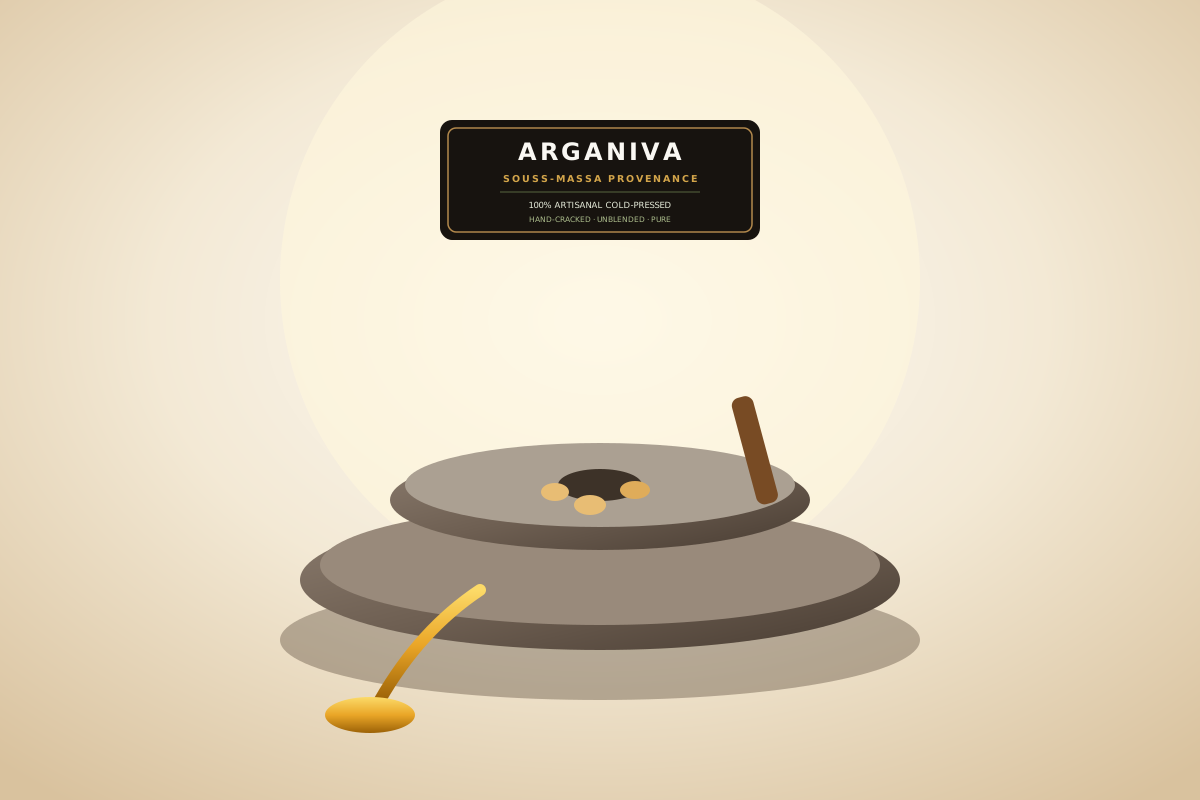
How is argan oil made?
Argan oil is made by harvesting the fruit of the argan tree, removing the hard nut inside, cracking that nut by hand to extract the kernels, and then pressing the kernels — either raw for cosmetic oil or roasted for culinary oil. It’s a process that stays close to its traditional roots because the hardest step, cracking the nut, still resists full mechanization.
Step 1: Harvesting the fruit
Argan fruit ripens on the tree and eventually falls to the ground, where it’s collected by hand, usually between June and August depending on the season and location within the Souss-Massa region. Each fruit is roughly olive-sized, with a thick, fleshy outer layer surrounding a very hard nut.
Step 2: Removing the pulp
The outer flesh is stripped away from the nut. Traditionally this pulp isn’t wasted — it’s used as animal fodder, since it has little value for oil production but is edible for livestock like goats and camels common to the region.
Step 3: Cracking the nut
This is the step that defines argan oil production. The nut itself is extremely hard — hard enough that mechanical crackers tend to crush the kernel along with the shell, ruining the yield. Because of this, cracking is still typically done by hand, one nut at a time, usually between two stones. A skilled person can crack a meaningful pile of nuts in a day, but it’s slow, repetitive work, and it’s the main reason argan oil production is described as labor-intensive rather than industrial.
Inside each cracked nut are one to three small, almond-shaped kernels — the actual source of the oil.
Step 4: Roasting (culinary oil only)
Here the process splits in two:
- For cosmetic oil, the kernels go straight to pressing, unroasted.
- For culinary oil, the kernels are lightly roasted first, which develops the deep, toasted flavor and darker color associated with argan oil used in cooking.
This single step is why cosmetic and culinary argan oil taste, smell, and perform so differently despite starting from the same kernel — see our cosmetic vs culinary comparison for the full breakdown.
Step 5: Pressing
The kernels are pressed to extract the oil. Traditionally this was done with a hand-turned stone mill, and some cooperatives still press this way; more commonly today it’s done with a mechanical press, which is faster but still yields a modest amount of oil relative to the volume of kernels used. Either way, no solvents are involved in the kind of pressing used for the argan oil sold as a genuine cosmetic or food product — it’s a straightforward mechanical extraction.
Step 6: Settling and filtering
Freshly pressed oil contains fine particulate from the kernels. It’s left to settle, then filtered, before being bottled. This step matters for shelf stability and for the clarity of the final oil — an unfiltered oil can look cloudy and is more prone to going off quickly, so producers who skip or rush this step usually end up with a shorter shelf life and a less consistent product batch to batch.
What a day of production actually looks like
It’s worth picturing the scale of this to understand why yields are low. A single argan tree produces a limited crop of fruit each season, and from that fruit, only a fraction of the weight ends up as usable kernel — the rest is shell and pulp discarded or repurposed along the way. Cracking enough nuts to fill even one bottle of oil takes real time: a single person working steadily might spend the better part of a day cracking nuts to produce what amounts to a modest quantity of kernels, which are then pressed down further into a comparatively small volume of oil. Multiply that across everything sold and it becomes clear why this isn’t a process that scales the way a mechanized seed-oil operation does.
Old methods versus current practice
The traditional stone-mill press — a heavy circular stone turned by hand or with animal power — is still used by some smaller producers and is often what’s demonstrated for visitors at cooperatives near Marrakech. Most oil sold commercially today, including what reaches export markets, comes from mechanical presses that replicate the same cold-pressing principle at a steadier, more consistent rate. What hasn’t changed, regardless of how the pressing itself is done, is the hand-cracking step upstream of it — that part of the process has resisted meaningful mechanization for decades, and remains the bottleneck that defines how much oil can realistically be produced.
Why this process explains the price
Put the steps together and a pattern emerges: hand-collected fruit, hand-cracked nuts, a modest oil yield per kernel, and a pressing step that isn’t run at industrial-food-oil scale. None of it is automatable in the way that, say, sunflower or canola oil production is. That’s the honest explanation for why authentic argan oil costs more than most vegetable oils on a shelf — and why a suspiciously cheap bottle is worth a second look. Our guide on how to choose authentic argan oil covers what to check before buying.
Who does this work
Much of Morocco’s argan oil production runs through women’s cooperatives in the Souss-Massa region, where cracking and pressing has traditionally been organized as cooperative labor. This is worth knowing not as a marketing point but as context for why the process looks the way it does — it’s built around a workforce and a set of skills passed down within communities near where the trees grow, not around a factory line.
Where to go from here
- Want the geography behind the tree itself? Read where does argan oil come from.
- Ready to buy the result? Browse cosmetic argan oil and culinary argan oil.
Frequently asked questions
Is argan oil still made by hand?
The nut-cracking step is still done by hand in most traditional production, since the nuts are too hard for most machinery to open without damaging the kernel inside. Pressing itself may be done with a manual or mechanical press depending on the producer.
Why is argan oil more expensive than other vegetable oils?
Argan trees produce a relatively small amount of usable kernels per fruit, and cracking the nuts by hand is slow, skilled work. Both factors limit how much oil can be produced in a given amount of time.
Do cosmetic and culinary argan oil go through the same process?
They share the harvesting and cracking steps, but diverge at the pressing stage — cosmetic oil is pressed from raw kernels, culinary oil from roasted ones.
Related products
Related articles
Where Does Argan Oil Come From?
Argan oil isn't just associated with Morocco as a marketing detail — the tree it comes from grows almost nowhere else on earth.
What Is Moroccan Argan Oil?
Argan oil comes from a single tree species that grows almost exclusively in one region of the world. Here's what that actually means for the oil you buy.
How to Choose Authentic Argan Oil
Argan oil is one of the more diluted products on the market. Here's a practical checklist for telling the real thing from a blend.
Cosmetic vs Culinary Argan Oil — What's the Difference?
They come from the same fruit, but cosmetic and culinary argan oil are made differently, smell different, and are not interchangeable.