Argan oil
The Complete Guide to Moroccan Argan Oil
Everything to know about Moroccan argan oil in one place — what it is, how it's made, the cosmetic vs culinary difference, how to buy it, and how to use it.
What is Moroccan argan oil, in short?
Moroccan argan oil is pressed from the kernels of the argan tree, a species native almost exclusively to southwestern Morocco, and comes in two distinct forms: unroasted cosmetic oil and roasted culinary oil. This guide walks through everything that follows from that one fact.
1. Where it comes from
The argan tree (Argania spinosa) grows in the Souss-Massa region of southwestern Morocco, between the Atlas Mountains and the Atlantic. It’s a slow-growing, drought-tolerant tree that can live for centuries and plays a role in preventing soil erosion in an otherwise arid landscape. This narrow growing region is why “Moroccan argan oil” functions almost like a geographic designation — see where does argan oil come from for more detail.
2. How it’s made
Argan fruit is harvested, the fleshy outer layer removed, and the hard nut inside cracked open to reveal one to three oil-rich kernels. Those kernels are then pressed:
- For cosmetic oil, the kernels are pressed unroasted, producing a lighter, milder oil.
- For culinary oil, the kernels are roasted first, producing a darker oil with a distinctive toasted aroma.
Full detail: how argan oil is made.
3. Cosmetic vs culinary — the difference that matters most
| Cosmetic | Culinary | |
|---|---|---|
| Kernels | Unroasted | Roasted |
| Aroma | Light, mild | Toasted, pronounced |
| Used for | Hair, skin, nails | Food, amlou, finishing dishes |
Get this wrong and you’ll end up with the wrong product for what you actually want to do — see the full cosmetic vs culinary comparison.
4. How to tell authentic argan oil from diluted or fake versions
- Check the ingredient list — it should read close to “100% Argania spinosa kernel oil,” not a blend of oils.
- Be cautious of very low prices in high-tourist-traffic areas, where dilution is more common.
- A strong, artificial fragrance is a warning sign — pure argan oil has a mild, natural nutty scent (cosmetic) or a toasted scent (culinary), not a perfume-like one.
More detail: how to choose authentic argan oil.
5. How to buy it — from home or in Morocco
From outside Morocco: order online and have it shipped internationally. Availability and delivery time depend on your country and are confirmed directly with you — see shipping argan oil internationally.
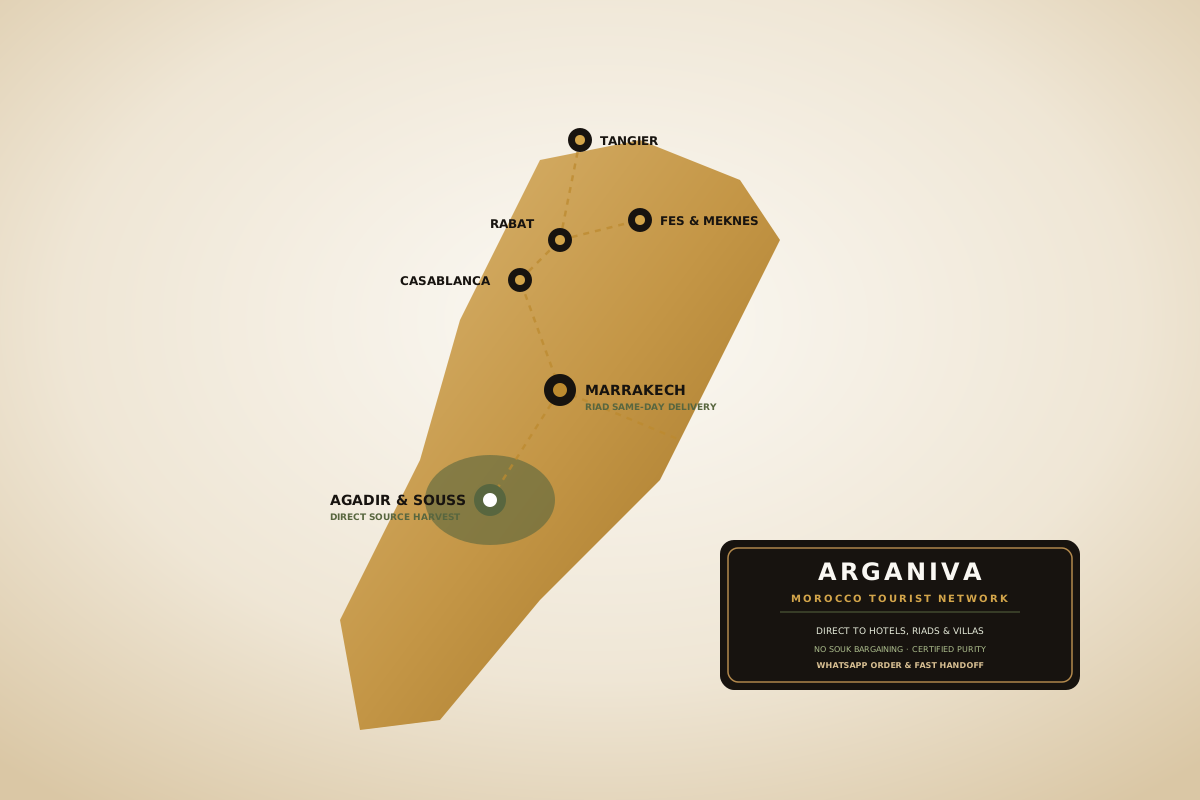
While traveling in Morocco: you can buy from souks and cooperatives directly, or order ahead for delivery to your hotel or riad in the cities ARGANIVA currently serves — Marrakech, Fes, Tangier, Agadir, Rabat, Casablanca, Ouarzazate, and Errachidia.
6. How to use it
Cosmetic: apply a few drops to hair, skin, or nails as part of a daily routine.
Culinary: use cold or gently warmed — drizzle over bread, blend into amlou with almonds and honey, or finish a dish with it. Avoid high-heat cooking, which diminishes its flavor.
7. How to store it
Keep it sealed, out of direct sunlight, and at room temperature to preserve its quality.
Where to go next
- Browse cosmetic argan oil and culinary argan oil
- See tourist delivery across Morocco
- Check international shipping
- Or message us on WhatsApp with any question this guide didn’t answer.
Frequently asked questions
Is argan oil only from Morocco?
The argan tree grows almost exclusively in southwestern Morocco, which is why authentic argan oil is closely tied to the country.
What's the single biggest thing to know before buying argan oil?
That it comes in two different forms — cosmetic and culinary — made differently and used for different purposes. Knowing which one you want avoids most buying mistakes.
Related products
Related articles
What Is Moroccan Argan Oil?
Argan oil comes from a single tree species that grows almost exclusively in one region of the world. Here's what that actually means for the oil you buy.
How Is Argan Oil Made?
From fruit on a tree to oil in a bottle, argan oil goes through a slow, mostly manual process that hasn't changed much in generations.
Cosmetic vs Culinary Argan Oil — What's the Difference?
They come from the same fruit, but cosmetic and culinary argan oil are made differently, smell different, and are not interchangeable.
How to Choose Authentic Argan Oil
Argan oil is one of the more diluted products on the market. Here's a practical checklist for telling the real thing from a blend.
What to Expect When Shipping Argan Oil Internationally
Shipping a liquid in a glass bottle across a border involves a few real considerations — here's what actually matters and what varies too much to generalize.
Related delivery cities
Marrakech
Marrakech is Morocco's most visited city, and also where the most imitation "argan oil" is sold to tourists in souks and roadside stalls. ARGANIVA delivers authentic, pure argan oil straight to your riad or hotel, so you can skip the souk guesswork.
Agadir
Agadir sits inside the Souss-Massa region, the native habitat of the argan tree, closer to where argan oil is actually produced than any other major Moroccan tourist city.