Moroccan beauty
Argan Oil vs Rosemary Oil for Hair: Differences, Growth Benefits & How to Combine Them
Compare argan oil vs rosemary oil for hair growth, scalp stimulation, and strand strength. Learn why rosemary needs a carrier oil and how to mix them safely.
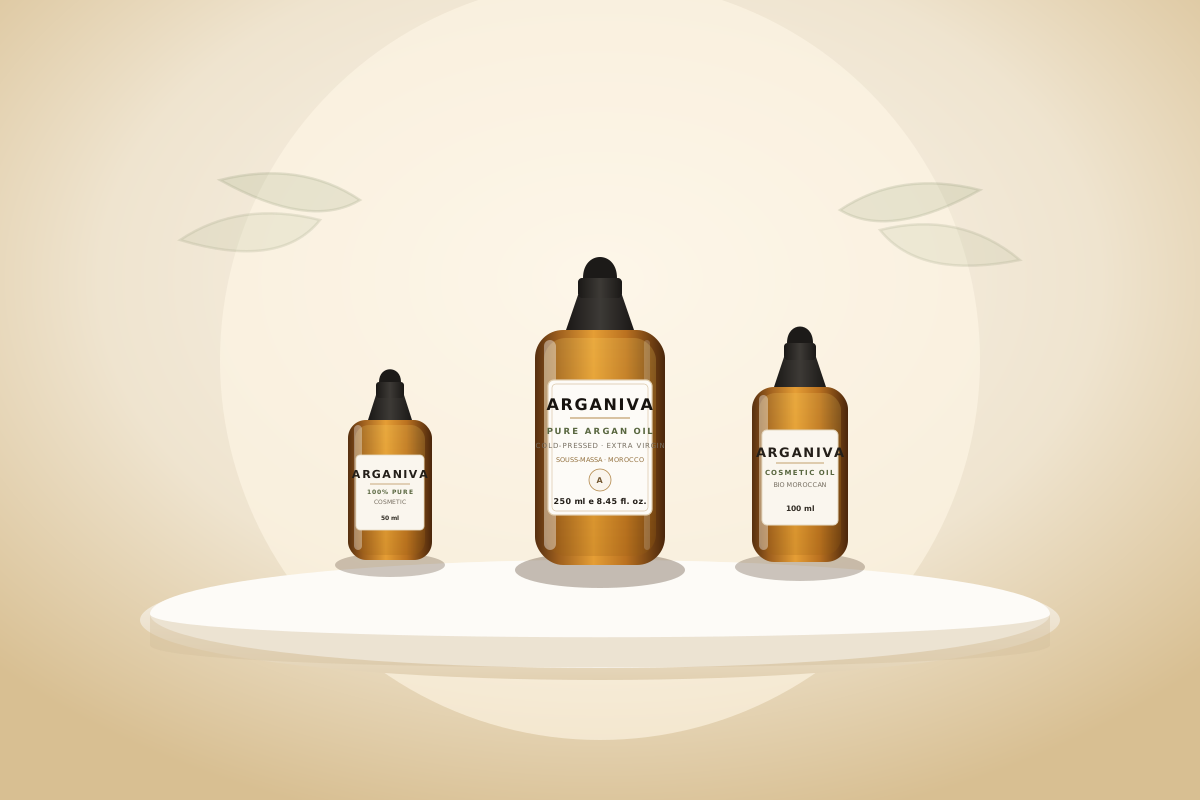
Argan Oil vs Rosemary Oil for Hair: The Truth About Growth & Care
Over the past few years, natural hair care has seen an explosion of interest in rosemary oil and argan oil. Social media trends and clinical discussions frequently praise both ingredients as miracle elixirs for achieving thicker, longer, and healthier hair.
However, many people mistakenly view argan oil and rosemary oil as direct competitors—asking whether they should choose one or the other.
In reality, argan oil and rosemary oil are fundamentally different substances that perform complementary functions:
- Rosemary oil is a potent, volatile essential oil focused on stimulating the scalp and hair follicles.
- Argan oil is a nutrient-rich, lipid-dense carrier oil focused on protecting, sealing, and strengthening the hair fibers.
This guide explains the science behind both botanicals, clarifies the difference between follicle stimulation and length retention, and provides safe, actionable recipes for combining them in your hair routine.
Quick Comparison: Argan Oil vs Rosemary Oil
| Property | Pure Moroccan Argan Oil | Pure Rosemary Essential Oil |
|---|---|---|
| Category | Carrier Oil / Fixed Plant Lipid | Essential Oil (Volatile Plant Extract) |
| Extraction Method | Cold-pressed from Argania spinosa kernels | Steam-distilled from Rosmarinus officinalis leaves |
| Direct Application | 100% Safe to apply directly to skin, face & hair | DANGEROUS if applied undiluted (causes chemical burns) |
| Target Area | Hair shaft, mid-lengths, ends, and skin barrier | Scalp skin, hair follicles, microcirculation |
| Primary Mechanism | Lubrication, elasticity, cuticle sealing, Vitamin E | Increases blood flow, stimulates cellular turnover |
| Fatty Acid Content | Rich in Oleic Acid, Linoleic Acid, Squalene | Contains zero fatty acids / lipids |
| Active Phytochemicals | Tocopherols (Vitamin E), Plant Sterols, Polyphenols | 1,8-Cineole, Camphor, Carnosic Acid, Rosmarinic Acid |
| Hair Goal | Length Retention & Breakage Prevention | Follicle Stimulation & Growth Support |
| Usage Frequency | Daily as a leave-in; weekly as a deep treatment | 2–3 times per week as a diluted rinse-out scalp oil |
1. Essential Oil vs. Carrier Oil: Why the Distinction Matters
To use these oils safely and effectively, you must understand the critical difference between an essential oil and a carrier (fixed) oil.
                    ┌─────────────────────────┐
                    │    BOTANICAL CATEGORIES │
                    └────────────┬────────────┘
                                 │
         ┌───────────────────────┴───────────────────────┐
         ▼                                               ▼
┌─────────────────────────────────┐   ┌─────────────────────────────────┐
│       CARRIER (FIXED) OIL       │   │          ESSENTIAL OIL          │
│       e.g., Pure Argan Oil      │   │       e.g., Rosemary Oil        │
├─────────────────────────────────┤   ├─────────────────────────────────┤
│ • Fatty acids & triglycerides   │   │ • Concentrated aromatic extract │
│ • Non-volatile, gentle lipids   │   │ • Highly volatile phytochemicals│
│ • Safe to use 100% undiluted    │   │ • MUST be diluted in carrier    │
│ • Nourishes shaft & seals water │   │ • Stimulates biological receptors│
└─────────────────────────────────┘   └─────────────────────────────────┘
What Is Rosemary Essential Oil?
Rosemary essential oil is produced via steam distillation of the flowering tops and leaves of the rosemary plant (Rosmarinus officinalis).
- It is not a moisturizing oil and contains no fatty acids.
- Instead, it is a hyper-concentrated solution of volatile organic compounds, including 1,8-cineole (eucalyptol), camphor, and carnosic acid.
- Crucial Safety Rule: Because of its extreme potency, applying undiluted rosemary essential oil directly to your scalp can trigger severe contact dermatitis, scalp burns, allergic reactions, and paradoxical hair loss. It must always be diluted inside a fatty carrier oil before touching your skin.
What Is Argan Carrier Oil?
Argan oil is a “fixed” vegetable oil cold-pressed from the seeds of the Moroccan argan tree.
- It is composed of nourishing fatty acids (Omega-6 and Omega-9), plant sterols, and high levels of natural vitamin E.
- It is non-volatile, deeply hydrating, and completely gentle on human skin.
- Argan oil acts as the ideal carrier oil for rosemary: its rich lipid base safely dissolves the potent rosemary molecules, spreads them evenly across the scalp, and buffers the skin against irritation.
2. The Science of Hair Growth: Stimulation vs. Retention
A common misconception is that hair length is determined solely by how fast hair emerges from the scalp. In reality, healthy hair length is a two-part equation:
$$\text{Visible Hair Growth} = \text{Follicle Production (Scalp)} - \text{Fiber Breakage (Ends)}$$
┌────────────────────────────────────────────────────────────────────────┐
│                   THE HAIR GROWTH & LENGTH FORMULA                     │
├──────────────────────────────────────────────────┬─────────────────────┤
│ 1. SCALP STIMULATION (Rosemary Oil)              │ 2. LENGTH RETENTION │
│ • Increases blood circulation around follicles   │    (Argan Oil)      │
│ • Delivers oxygen & nutrients to hair bulb       │ • Lubricates shaft  │
│ • Extends anagen (growth) phase of hair cycle    │ • Prevents splits   │
│ • Helps calm micro-inflammation on scalp         │ • Buffers friction  │
└──────────────────────────────────────────────────┴─────────────────────┘
How Rosemary Oil Works on the Scalp
Scientific research into rosemary oil highlights several biological pathways:
- Microvascular Circulation: Carnosic acid in rosemary oil promotes blood vessel dilation in the scalp, increasing the delivery of oxygen, amino acids, and essential nutrients to dormant hair follicles.
- DHT Pathway Support: Comparative clinical studies (such as the 2015 randomized trial comparing rosemary oil to 2% minoxidil) found that consistent application of rosemary oil over six months produced comparable increases in hair count, likely by counteracting DHT-related miniaturization of follicles.
- Calming Scalp Micro-Inflammation: Rosmarinic acid possesses natural antimicrobial and anti-inflammatory properties that help maintain a balanced, flake-free scalp environment.
How Argan Oil Works on the Hair Shaft
Even if rosemary oil stimulates robust new growth at the root, your hair will never gain visible length if the ends are dry and brittle:
- Preventing Mechanical Breakage: Daily combing, brushing, styling, and friction against clothing create microscopic fissures along the hair shaft. Argan oil coats the cuticle in a flexible lipid shield that reduces friction by up to 70%.
- Sealing the Cuticle: Argan oil flattens the outer cuticle scales, locking in hydration and preventing moisture from evaporating (which causes dry, snapping ends).
- High Vitamin E Antioxidant Defense: With ~600–700 mg/kg of active tocopherols, argan oil neutralizes free radicals from UV sunlight and urban pollution that degrade hair keratin.
Summary: Rosemary oil acts at the root to support the follicle. Argan oil acts along the length to ensure your hair doesn’t break off before you can see your growth.
3. Argan Oil vs Rosemary Oil vs Castor Oil
Many hair oiling routines also incorporate castor oil. Here is how all three compare:
┌─────────────────┬────────────────────┬────────────────────┬────────────────────┐
│ FEATURE         │ ARGAN OIL          │ ROSEMARY OIL       │ CASTOR OIL         │
├─────────────────┼────────────────────┼────────────────────┼────────────────────┤
│ Type            │ Lightweight Carrier│ Essential Oil      │ Ultra-Heavy Carrier│
│ Viscosity       │ Silky, fast glide  │ Watery, volatile   │ Thick, sticky, syrupy│
│ Primary Focus   │ Shaft, ends, shine │ Scalp follicles    │ Edge density & roots│
│ Cleansing Ease  │ Very easy (1 wash) │ Easy (with carrier)│ Hard (2–3 shampoos)│
│ Risk of Buildup │ Very low           │ None (volatile)    │ High (can mat hair)│
│ Direct Use?     │ Yes (100% pure)    │ No (must dilute)   │ Yes (often diluted)│
└─────────────────┴────────────────────┴────────────────────┴────────────────────┘
While castor oil is famous for its thick, ricinoleic acid profile, its high viscosity makes it difficult to wash out without aggressive shampooing, which can inadvertently strip delicate new hair growth.
Argan oil is widely considered the superior carrier oil for rosemary because it has a silky, lightweight viscosity that distributes effortlessly across the scalp and rinses out cleanly with gentle, sulfate-free shampoos.
4. The Perfect Recipe: How to Mix Argan and Rosemary Oil Safely
To safely unlock the benefits of both botanicals without causing scalp irritation, follow this dermatologist-approved dilution formula:
┌────────────────────────────────────────────────────────────────────────┐
│             THE ULTIMATE ARGAN + ROSEMARY SCALP ELIXIR                 │
├────────────────────────────────────────────────────────────────────────┤
│ THE SAFE DILUTION FORMULA (1.5% DILUTION):                             │
│ • 30 ml (2 tablespoons / 1 oz) Pure Cold-Pressed Moroccan Argan Oil    │
│ • 9 to 10 drops of 100% Pure Rosemary Essential Oil                   │
│                                                                        │
│ OPTIONAL BOOSTERS:                                                     │
│ • 3 drops of Peppermint Essential Oil (for cooling circulation)        │
│ • 5 drops of Golden Jojoba Oil (for excess sebum regulation)           │
│                                                                        │
│ EQUIPMENT:                                                             │
│ • Amber glass dropper bottle (protects essential oils from light)       │
└────────────────────────────────────────────────────────────────────────┘
Step-by-Step Scalp Application Routine
STEP 1: DETANGLE ───► STEP 2: APPLY TO SCALP ───► STEP 3: MASSAGE (5 MIN) ───► STEP 4: SHAMPOO
Gently brush hair     Part hair in sections;      Use fingertips or scalp      Leave on 30–60 min;
before oiling drop 4–6 drops on scalp brush in circular motions rinse thoroughly- Step 1: Prep & Section: Thoroughly brush dry hair to remove tangles. Part your hair down the center into 4 to 6 clean sections.
- Step 2: Targeted Dropper Application: Fill your glass dropper with your Argan + Rosemary blend. Place 4 to 6 drops directly onto the scalp along each parted section.
- Step 3: Scalp Massage (5 Minutes): Using the soft pads of your fingertips (never your fingernails) or a silicone scalp massager, massage your scalp in gentle, circular motions for 4 to 5 minutes. This stimulates lymphatic drainage, increases blood flow, and distributes the oil evenly.
- Step 4: Protect the Ends (Pure Argan Oil): Take 2 to 3 drops of pure argan oil (without rosemary) and smooth them through your mid-lengths and ends to shield them while your scalp treatment works.
- Step 5: Processing Time: Leave the treatment on your scalp for 30 to 60 minutes. (Avoid leaving concentrated essential oil blends on overnight if you have sensitive skin).
- Step 6: Wash Out: In the shower, wet your hair, apply a gentle shampoo directly to the scalp, lather thoroughly, and rinse with warm water. Follow with conditioner on your ends.
5. How Often Should You Do Scalp Oiling?
- For General Hair Health & Shine: 1 time per week.
- For Targeted Hair Growth & Thinning Concerns: 2 to 3 times per week for a minimum of 3 to 6 consecutive months.
- Daily Maintenance: Do not use the rosemary scalp blend daily. Instead, use 1 drop of pure argan oil on dry ends every morning to tame flyaways and add daily gloss.
6. Realistic Expectations: What to Expect Over 6 Months
Understanding the biological hair growth cycle prevents premature disappointment:
- Month 1 (Weeks 1–4): You will notice immediate improvements in hair softness, manageable ends, reduced frizz, and a calmer, less itchy scalp. Visible changes in density are not expected yet.
- Months 2–3 (Weeks 5–12): Hair shedding during brushing and showering typically stabilizes. Hair strands feel stronger and more elastic due to argan oil’s cuticle reinforcement.
- Months 4–6 (Weeks 13–24): Fine, short “baby hairs” along the hairline and parting lines become noticeable. Strands retain their length without splitting, leading to thicker, fuller-looking density.
Quality Checklist: Buying the Right Oils
To ensure your DIY treatment produces real results, check your ingredient labels carefully:
┌──────────────────────────────────────┬────────────────────────────────┐
│ FOR ARGAN OIL                        │ FOR ROSEMARY OIL               │
├──────────────────────────────────────┼────────────────────────────────┤
│ ✓ 100% Pure Argania Spinosa Oil      │ ✓ 100% Pure Essential Oil      │
│ ✓ Cold-Pressed, Unroasted kernels    │ ✓ Rosmarinus Officinalis leaf  │
│ ✓ Origin: Souss-Massa, Morocco       │ ✓ Steam-distilled extraction   │
│ ✓ Packaged in dark amber glass       │ ✓ No synthetic fragrance/dip   │
│ ✗ No silicones (dimethicone)         │ ✗ Never apply undiluted        │
└──────────────────────────────────────┴────────────────────────────────┘
At ARGANIVA, our pure Moroccan cosmetic argan oil is 100% single-origin, harvested by local cooperatives in Souss-Massa, cold-pressed fresh, and bottled without synthetic additives—making it the gold standard carrier oil for your hair care ritual.
Frequently Asked Questions
Can rosemary oil cause scalp irritation?
Yes, if used improperly or undiluted. Essential oils are concentrated chemical compounds that require a fatty carrier oil like argan oil to be safely tolerated by the skin. Always perform a 24-hour patch test on your inner forearm before applying a new blend to your scalp.
Is argan oil alone enough for hair growth?
Argan oil will not biologically speed up the rate at which follicles produce hair, but it is essential for length retention. Without argan oil protecting the hair fibers from split ends and snapping, new growth at the scalp will break off at the ends, creating the illusion that your hair is not growing.
Can I mix rosemary oil into my daily shampoo instead?
Yes. You can add 2 to 3 drops of pure rosemary essential oil directly into your palm with your regular dollop of shampoo, lather into your scalp, leave on for 2 to 3 minutes, and rinse. Follow with 1 drop of pure argan oil on towel-dried ends.
Does boiling fresh rosemary sprigs work better than rosemary oil?
Rosemary water (made by boiling fresh rosemary sprigs) is a popular DIY alternative. While rosemary water is lightweight and water-based, essential oil distilled from rosemary leaves contains a much higher concentration of active carnosic acid and 1,8-cineole. Combining rosemary essential oil with pure argan oil provides both the follicle stimulation of rosemary and the lipid moisture barrier of argan oil.
Frequently asked questions
Can I apply pure rosemary oil directly to my scalp?
No. Pure rosemary oil is a highly concentrated essential oil that will cause severe scalp irritation, contact dermatitis, chemical burning, and paradoxical hair shedding if applied undiluted. It must always be diluted into a gentle carrier oil like pure Moroccan argan oil (typically at a safe 1% to 2% dilution ratio).
Is argan oil or rosemary oil better for hair growth?
They play complementary roles. Rosemary oil stimulates blood microcirculation in the scalp and helps inhibit DHT to support follicle activity. Argan oil provides length retention by lubricating the hair shaft, preventing mechanical breakage, eliminating split ends, and supplying vitamin E. Without argan oil protecting the hair fibers, new growth stimulated by rosemary oil can simply snap off at the ends.
What is the best recipe to mix argan oil and rosemary oil?
For a safe and effective 1.5% scalp oil blend: mix 2 tablespoons (30 ml / 1 oz) of pure cold-pressed argan oil with 9 to 10 drops of 100% pure rosemary essential oil. Store in a dark glass dropper bottle, massage into the scalp 2 to 3 times weekly, leave on for 30 to 60 minutes, and shampoo out.
How long does it take to see results from rosemary and argan oil?
Scalp and follicle stimulation takes time because of the biological human hair growth cycle. Clinical studies show that consistent scalp oiling with rosemary and a nourishing carrier oil requires at least 3 to 6 months of continuous application (2 to 3 times per week) to see measurable improvements in hair density.
Can I leave rosemary and argan oil in my hair overnight?
You can, but it is generally not necessary and can irritate sensitive scalps. Leaving the blend on for 30 to 60 minutes before shampooing delivers maximum active botanical benefits. If you do leave it overnight, always patch-test your blend first.
Related products
Related articles
How to Use Argan Oil for Hair
A small amount goes a long way. Here's how argan oil is actually used on hair, and how much to apply where.
Argan Oil vs Coconut Oil: The Complete Hair and Skin Comparison
Should you use argan oil or coconut oil? We break down the science of fatty acids, comedogenic ratings, porosity, and hair protein sensitivity so you choose the right oil for your routine.
Argan Oil vs Jojoba Oil: Which Is Better for Face, Hair & Scalp?
Argan oil and jojoba oil are two of the most celebrated botanical oils in beauty. We compare their molecular structures, sebum-mimicking traits, and performance for acne, anti-aging, and hair.
How to Choose Authentic Argan Oil
Argan oil is one of the more diluted products on the market. Here's a practical checklist for telling the real thing from a blend.