Moroccan beauty
Argan Oil vs Coconut Oil: The Complete Hair and Skin Comparison
Compare argan oil vs coconut oil for hair, skin, and face. Understand fatty acid profiles, comedogenic ratings, protein sensitivity, and how to choose the right oil.
Argan Oil vs Coconut Oil: Which One Should You Choose?
When comparing natural oils for beauty and personal care, argan oil and coconut oil are the two most popular options on the market. Both are plant-based, natural lipid sources that have been used for centuries—argan oil traditionally in southwestern Morocco and coconut oil across tropical coastal regions worldwide.
However, from a biochemical, dermatological, and hair-care perspective, argan oil and coconut oil behave completely differently. Choosing the wrong one can lead to clogged facial pores, greasy roots, or surprisingly dry, brittle hair strands.
This comprehensive guide breaks down the science, lipid profiles, comedogenic ratings, and practical applications of argan oil versus coconut oil so you can make an informed decision for your hair and skin.
Quick Comparison: Argan Oil vs Coconut Oil at a Glance
| Feature | Pure Moroccan Argan Oil | Virgin Coconut Oil |
|---|---|---|
| Botanical Source | Cold-pressed kernels of Argania spinosa (Morocco) | Expeller-pressed meat of Cocos nucifera (Tropics) |
| Texture & State | Lightweight golden liquid at room temperature | Solid white butter below 24°C (76°F); greasy liquid above |
| Comedogenic Rating | 0 / 5 (Completely Non-Comedogenic) | 4 / 5 (High Likelihood of Clogging Pores) |
| Primary Fatty Acids | Oleic Acid (~43–49%), Linoleic Acid (~29–36%) | Lauric Acid (~48–53%), Myristic Acid (~16–19%) |
| Fat Type | Unsaturated Fatty Acids (Omega-6 & Omega-9) | Medium-Chain Saturated Fatty Acids (MCTs) |
| Vitamin E (Tocopherol) | Extremely High (~600–700 mg/kg) | Negligible / Trace amounts |
| Hair Action | Coats and seals cuticle, tames frizz, adds gloss | Penetrates deep into cortex, binds to hair proteins |
| Best Hair Types | All types (Fine, Medium, Curly, Low & High Porosity) | Thick, Coarse, High Porosity, Undamaged Hair |
| Best Skin Uses | Facial hydration, anti-aging, barrier repair, acne-prone skin | Body moisturizing, shaving balm, dry heels and elbows |
| Heat Styling Safe? | Yes, helps buffer heat tools as a lightweight finishing drop | Avoid before high heat; can fry or smoke under direct iron heat |
1. The Biochemical Differences: Fatty Acid Composition
To understand why argan oil and coconut oil perform so differently on your body, you have to look at their molecular makeup.
                    ┌─────────────────────────┐
                    │    PLANT LIPID PROFILES │
                    └────────────┬────────────┘
                                 │
         ┌───────────────────────┴───────────────────────┐
         ▼                                               ▼
┌─────────────────────────────────┐   ┌─────────────────────────────────┐
│     MOROCCAN ARGAN OIL          │   │      VIRGIN COCONUT OIL         │
├─────────────────────────────────┤   ├─────────────────────────────────┤
│ • ~80% Unsaturated Fatty Acids  │   │ • ~90% Saturated Fatty Acids    │
│ • Rich in Oleic & Linoleic Acid │   │ • Dominated by Lauric Acid      │
│ • Abundant Vitamin E & Sterols  │   │ • Low Molecular Weight MCTs     │
│ • Zero Pore Clogging (Score: 0) │   │ • High Pore Clogging (Score: 4) │
│ • Lubricating & Cuticle-Sealing │   │ • Protein-Binding & Cortex Deep │
└─────────────────────────────────┘   └─────────────────────────────────┘
The Lipid Makeup of Pure Argan Oil
Pure cosmetic argan oil is composed primarily of unsaturated fatty acids:
- Oleic Acid (Omega-9, 43–49%): A nourishing mono-unsaturated fatty acid that delivers moisture and facilitates skin absorption without leaving a heavy film.
- Linoleic Acid (Omega-6, 29–36%): An essential polyunsaturated fatty acid crucial for maintaining a resilient skin barrier and soothing inflammation.
- Vitamin E (Alpha- and Gamma-Tocopherol): Argan oil contains roughly twice the vitamin E concentration of olive oil, providing potent antioxidant protection against environmental oxidation and UV-induced free radicals.
- Plant Sterols & Squalene: Rare sterols (schottenol and spinasterol) assist in cell membrane regeneration and moisture retention.
The Lipid Makeup of Virgin Coconut Oil
Coconut oil consists almost entirely (~90%) of saturated fatty acids:
- Lauric Acid (48–53%): A medium-chain saturated fatty acid with a straight-chain molecular structure and a low molecular weight.
- Myristic Acid (16–19%) & Palmitic Acid (8–10%): Heavy saturated fats that solidify at room temperature.
- Caprylic & Capric Acids: Shorter-chain triglycerides known for antibacterial properties.
Because lauric acid is linear and compact, coconut oil has a unique ability to penetrate inside the hair shaft. While this sounds beneficial, it is precisely why coconut oil causes adverse reactions for many hair types.
2. Argan Oil vs Coconut Oil for Hair Care
Hair care is the most common battleground between these two oils. The question of whether argan oil or coconut oil is better depends on hair porosity, strand thickness, and protein sensitivity.
                        ┌──────────────────────────────┐
                        │   WHICH OIL FOR YOUR HAIR?   │
                        └──────────────┬───────────────┘
                                       │
            ┌──────────────────────────┴──────────────────────────┐
            ▼                                                     ▼
┌───────────────────────────────┐             ┌───────────────────────────────┐
│       CHOOSE ARGAN OIL        │             │      CHOOSE COCONUT OIL       │
├───────────────────────────────┤             ├───────────────────────────────┤
│ • Fine or easily weighed-down │             │ • Very thick, coarse texture  │
│ • Low porosity (tight cuticles│             │ • Highly porous / bleached    │
│ • Protein-sensitive hair      │             │ • Pre-shampoo overnight soak  │
│ • Frizz control & daily shine │             │ • Strong, undamaged strands   │
│ • Finishing step & blow dry   │             │ • Budget deep-conditioning   │
└───────────────────────────────┘             └───────────────────────────────┘
How Coconut Oil Interacts with Hair: The Protein Paradox
Because lauric acid has a strong affinity for hair keratins and a small molecular structure, coconut oil enters the internal cortex of the hair strand.
- The Benefit: In damaged, chemically bleached, or highly porous hair, coconut oil reduces protein loss during washing by preventing excessive water absorption (hygral fatigue).
- The Problem (The “Straw Effect”): On normal, fine, or low-porosity hair, coconut oil fills the cortex and hardens as it cools. This prevents essential water moisture from penetrating the hair. Over time, hair treated with coconut oil can turn stiff, brittle, rough, and prone to snapping. This phenomenon is frequently mistaken for dryness, causing people to apply even more coconut oil and exacerbating the problem.
How Argan Oil Interacts with Hair: Cuticle Coating & Flexibility
Argan oil is formulated by nature with larger, unsaturated fatty acid chains that do not force their way into the protein matrix of the cortex. Instead, argan oil works on the cuticle layer:
- Lubricates the Cuticle: It forms a microscopic, breathable lipid shield around each hair fiber, flattening raised cuticles and eliminating frizz.
- Reflects Light: Because the outer cuticle is smoothed, hair achieves a reflective, natural gloss without feeling greasy or heavy.
- Improves Elasticity: Argan oil provides slip and flexibility, reducing friction during brushing, detangling, and styling.
- Safe for Low Porosity & Protein-Sensitive Strands: Because it does not bind to proteins, argan oil never causes brittleness or stiffness, regardless of how often you use it.
Argan Oil vs Coconut Oil by Hair Category
| Hair Type / Concern | Winner | Why? |
|---|---|---|
| Fine or Thin Hair | Argan Oil | Coconut oil immediately flattens fine hair into stringy clumps. 1 drop of argan oil adds shine without robbing volume. |
| Low Porosity Hair | Argan Oil | Low-porosity cuticles are tightly clamped shut. Coconut oil sits on top and solidifies. Argan oil spreads evenly and seals damp moisture. |
| Frizz Control & Flyaways | Argan Oil | Argan oil acts as an instant anti-humidity barrier. Coconut oil can melt in the heat and turn greasy in the sun. |
| Heat Styling & Blow Drying | Argan Oil | Argan oil provides lightweight thermal buffering when applied to damp ends before drying. Coconut oil has a lower smoke threshold and can burn. |
| Bleached or Chemically Processed | Tie / Both | Coconut oil as an overnight pre-wash mask to prevent protein erosion; argan oil daily as a leave-in treatment for softness. |
| Curly & Textured Hair (3A–4C) | Both | Coconut oil as an intensive moisture-sealing base for high-density curls; argan oil for daily curl refreshment and definition. |
3. Argan Oil vs Coconut Oil for Skin and Face
If you plan to apply oil to your face or neck, the difference between argan oil and coconut oil is stark.
                  ┌────────────────────────────────────────┐
                  │      FACIAL COMEDOGENIC SCALE          │
                  │   0 = Will Not Clog  │  5 = High Risk  │
                  └───────────────────┬────────────────────┘
                                      │
       ┌──────────────────────────────┴──────────────────────────────┐
       ▼                                                             ▼
[0] PURE ARGAN OIL                                            [4] COCONUT OIL
Non-comedogenic, safe for acne,                               High clogging potential,
lightweight, balances sebum.                                  best kept strictly for body.
The Comedogenic Rating: Why Coconut Oil Causes Breakouts
The comedogenic scale rates cosmetic ingredients from 0 (will not clog pores) to 5 (almost guaranteed to clog pores):
- Virgin Coconut Oil scores a 4 out of 5. Its high concentration of saturated myristic and lauric acids creates an occlusive film over the skin that traps sebum, dead skin cells, and Cutibacterium acnes bacteria within the pilosebaceous unit. Dermatologists widely advise against using coconut oil on acne-prone, combination, or facial skin.
- Pure Moroccan Argan Oil scores a 0 out of 5. It is completely non-comedogenic. Because its fatty acid profile is balanced between oleic and linoleic acids, it absorbs smoothly into the lipid matrix of the epidermis without congesting pores.
Balancing Oily and Acne-Prone Skin
A common myth is that oily or acne-prone skin should avoid all oils. In reality, acne-prone skin is frequently deficient in linoleic acid, which causes natural sebum to become thick, sticky, and prone to plugging pores.
Pure argan oil contains roughly 30–36% linoleic acid. When applied topically:
- It replenishes the skin’s linoleic acid reserves.
- It thins out sticky sebum, allowing pores to clear naturally.
- It signals the sebaceous glands to reduce excess oil production.
- Its high natural tocopherol (Vitamin E) content reduces the lipid peroxidation that triggers inflammatory acne lesions.
Anti-Aging and Skin Barrier Protection
For mature or dehydrated skin, argan oil’s antioxidant profile provides substantial benefits over coconut oil:
- Squalene and Polyphenols: Neutralize free radicals caused by sunlight and urban pollution.
- Ferulic Acid: Helps brighten dark spots and even out skin tone.
- Skin Elasticity: Clinical studies have demonstrated that daily topical application of argan oil improves skin elasticity and hydration in postmenopausal women by restoring the hydro-lipid barrier.
Where Coconut Oil Excels on the Body
While coconut oil should be kept away from the face, it is an exceptional, economical body moisturizer for:
- Extremely dry elbows, knees, cracked heels, and cuticles.
- Natural shaving cream alternative for legs.
- Body scrubs when mixed with raw cane sugar or sea salt.
- Soothing atopic eczema on thick body skin (due to the antimicrobial properties of lauric acid).
4. How to Use Each Oil in Your Beauty Routine
To get the best results from both oils without encountering unwanted side effects, use the following application frameworks:
How to Use Argan Oil (Daily Ritual)
                       ┌──────────────────────────────┐
                       │    ARGAN OIL DAILY STEPS     │
                       └──────────────┬───────────────┘
                                      │
     ┌────────────────────────────────┼────────────────────────────────┐
     ▼                                ▼                                ▼
[FOR THE FACE]                  [FOR THE HAIR]                   [FOR NAILS]
2–3 drops on damp skin          1–2 drops on towel-dried ends    1 drop massaged into
morning or night after toner before blow drying or air drying cuticles and nail beds- Facial Hydration: Cleanse your face, apply your hydrating serum or floral water (like rose water), and while your skin is still slightly damp, warm 2 to 3 drops of pure argan oil between your palms and gently press into your face, neck, and under-eye area.
- Hair Frizz & Shine Control: After washing, towel-dry your hair until damp. Warm 1 to 3 drops of argan oil in your hands and distribute through mid-lengths and ends. Proceed with air drying or heat styling.
- Post-Styling Polishing Drop: Rub half a drop between your fingertips and lightly glide over dry hair to tame static flyaways and add a mirror-like finish.
How to Use Coconut Oil (Weekly Body & Treatment Mask)
- Pre-Shampoo Intensive Mask (Thick / Coarse Hair Only): Warm 1 to 2 tablespoons of virgin coconut oil until liquefied. Apply from mid-lengths to ends on dry hair 30 to 45 minutes before showering. Wash out with two rounds of clarifying shampoo.
- Deep Body Moisturizer: Apply directly to damp skin immediately after showering on arms, legs, and feet to lock in moisture.
- Foot Softening Treatment: Massage generously into dry heels before bedtime, put on cotton socks, and leave overnight.
5. Summary Matrix: Which Oil Wins for What?
┌──────────────────────────────────────┬────────────────┬────────────────┐
│ GOAL / CONCERN                       │ ARGAN OIL      │ COCONUT OIL    │
├──────────────────────────────────────┼────────────────┼────────────────┤
│ Daily Facial Moisturizing            │ ★★★★★ (Best)   │ ★☆☆☆☆ (Avoid)  │
│ Acne & Oily Skin                     │ ★★★★★ (Best)   │ ☆☆☆☆☆ (Clogs)  │
│ Fine, Straight, or Low-Porosity Hair │ ★★★★★ (Best)   │ ★☆☆☆☆ (Heavy)  │
│ Frizz Taming & Gloss                 │ ★★★★★ (Best)   │ ★★☆☆☆ (Greasy) │
│ High-Porosity / Bleached Pre-Wash    │ ★★★★☆ (Good)   │ ★★★★★ (Best)   │
│ Body Skin Hydration (Legs/Arms)      │ ★★★★☆ (Luxury) │ ★★★★★ (Great)  │
│ Economic Value for Large Areas       │ ★★★☆☆ (Precious│ ★★★★★ (Budget) │
│ Heat Styling Defense                 │ ★★★★★ (Best)   │ ★☆☆☆☆ (Avoid)  │
└──────────────────────────────────────┴────────────────┴────────────────┘
The Verdict: Quality & Authenticity Matter
Whether you choose argan oil for your face, hair, and daily styling, or coconut oil for rich body care, purity is the deciding factor.
Many commercial “argan oil” hair serums on department store shelves contain less than 1% genuine argan oil, bulked out with silicones (like dimethicone and cyclopentasiloxane) and artificial fragrances. To experience the authentic benefits of Moroccan argan oil:
- Look for 100% pure Argania spinosa kernel oil on the ingredient list with zero additives.
- Ensure the oil is cold-pressed from unroasted kernels (cosmetic grade) rather than roasted culinary kernels.
- Choose oil stored in amber or dark glass bottles to protect the precious tocopherols and essential fatty acids from light degradation.
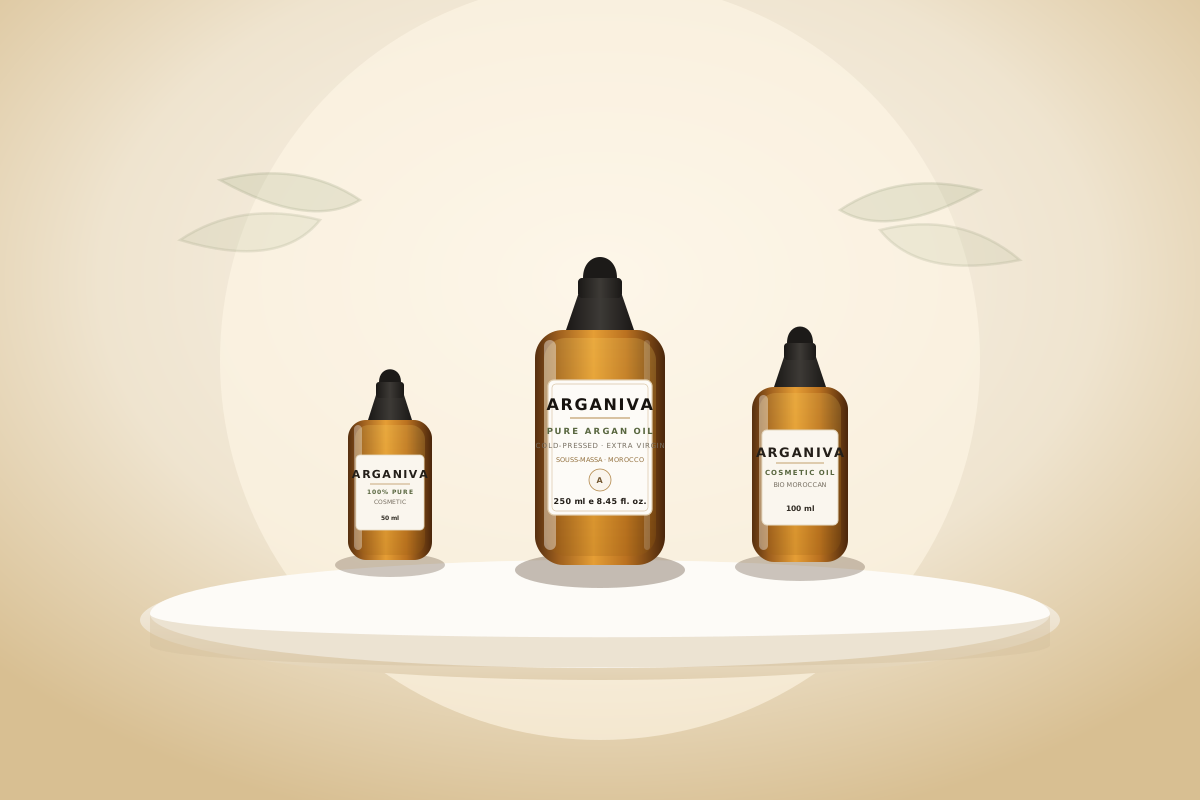
At ARGANIVA, our cosmetic argan oil is cold-pressed directly in Morocco’s Souss-Massa region, unblended, certified authentic, and bottled fresh to deliver the pure, lightweight botanical performance your hair and skin deserve.
Frequently Asked Questions
Can argan oil replace coconut oil in hair masks?
Yes. Argan oil provides superior cuticle smoothing, shine, and antioxidant protection without the risk of protein stiffness or buildup associated with coconut oil.
Why is pure argan oil more expensive than coconut oil?
Argan trees grow natively only in a limited biosphere reserve in southwestern Morocco, and the trees fruit once per year. Extracting argan oil is a labor-intensive, specialized process requiring hand-cracking hard nuts to collect the inner kernels. Coconut palms, by contrast, yield abundant fruit year-round across vast equatorial plantations worldwide.
Is argan oil safe for color-treated and highlighted hair?
Yes, exceptionally safe. Pure argan oil contains no sulfates, salts, or synthetic chemicals that strip hair dye. Its high antioxidant and vitamin E levels protect color-treated strands from UV-induced color fading.
Does argan oil smell like coconut oil?
No. Pure cosmetic argan oil has a very subtle, natural, earthy-nutty aroma that dissipates within minutes of application. Coconut oil carries a sweet, tropical, distinctive coconut scent. If an argan oil smells strongly of perfume, it has been adulterated with synthetic fragrances.
Frequently asked questions
Is argan oil or coconut oil better for hair?
Argan oil is generally better for daily styling, frizz control, shine, fine hair, and low-porosity hair because it is lightweight and coats the shaft without causing protein buildup. Coconut oil is better as a heavy pre-shampoo deep conditioning mask for coarse, undamaged, or high-porosity hair that can tolerate rich saturated fats.
Does coconut oil clog pores more than argan oil?
Yes, significantly. Coconut oil has a high comedogenic rating of 4 out of 5, making it very likely to clog facial pores and trigger breakouts. Pure argan oil has a comedogenic rating of 0, meaning it is non-comedogenic and safe for acne-prone and oily skin.
Why does coconut oil make some hair feel brittle and dry?
Coconut oil has a high affinity for hair proteins and penetrates deep into the cortex. On protein-sensitive, fine, or low-porosity hair, this creates a protein overload effect that prevents water from entering the shaft, leaving the strands feeling stiff, straw-like, and brittle. Argan oil does not cause protein buildup.
Can I use argan oil on my face every day?
Yes. Pure cosmetic argan oil is packed with vitamin E, polyphenols, and balanced oleic and linoleic acids. Because of its 0 comedogenic score and light texture, 2 to 3 drops applied to clean, damp skin daily provides hydration and strengthens the skin barrier without causing congestion.
Can you mix argan oil and coconut oil together?
Yes. You can combine them for a customized pre-shampoo hair mask. Mix a small amount of warm coconut oil for deep cortex nourishment with pure argan oil for cuticle smoothing, leave on for 30 minutes, and shampoo thoroughly.
Related products
Related articles
How to Use Argan Oil for Hair
A small amount goes a long way. Here's how argan oil is actually used on hair, and how much to apply where.
How to Use Argan Oil for Skin
Argan oil fits into a skincare routine in a few specific spots — face, body, and nails — and it's worth patch-testing before you commit to any of them.
How to Choose Authentic Argan Oil
Argan oil is one of the more diluted products on the market. Here's a practical checklist for telling the real thing from a blend.
The Complete Guide to Moroccan Argan Oil
One reference covering everything from what argan oil actually is to how to order it, whether you're shopping from abroad or standing in a Marrakech souk.